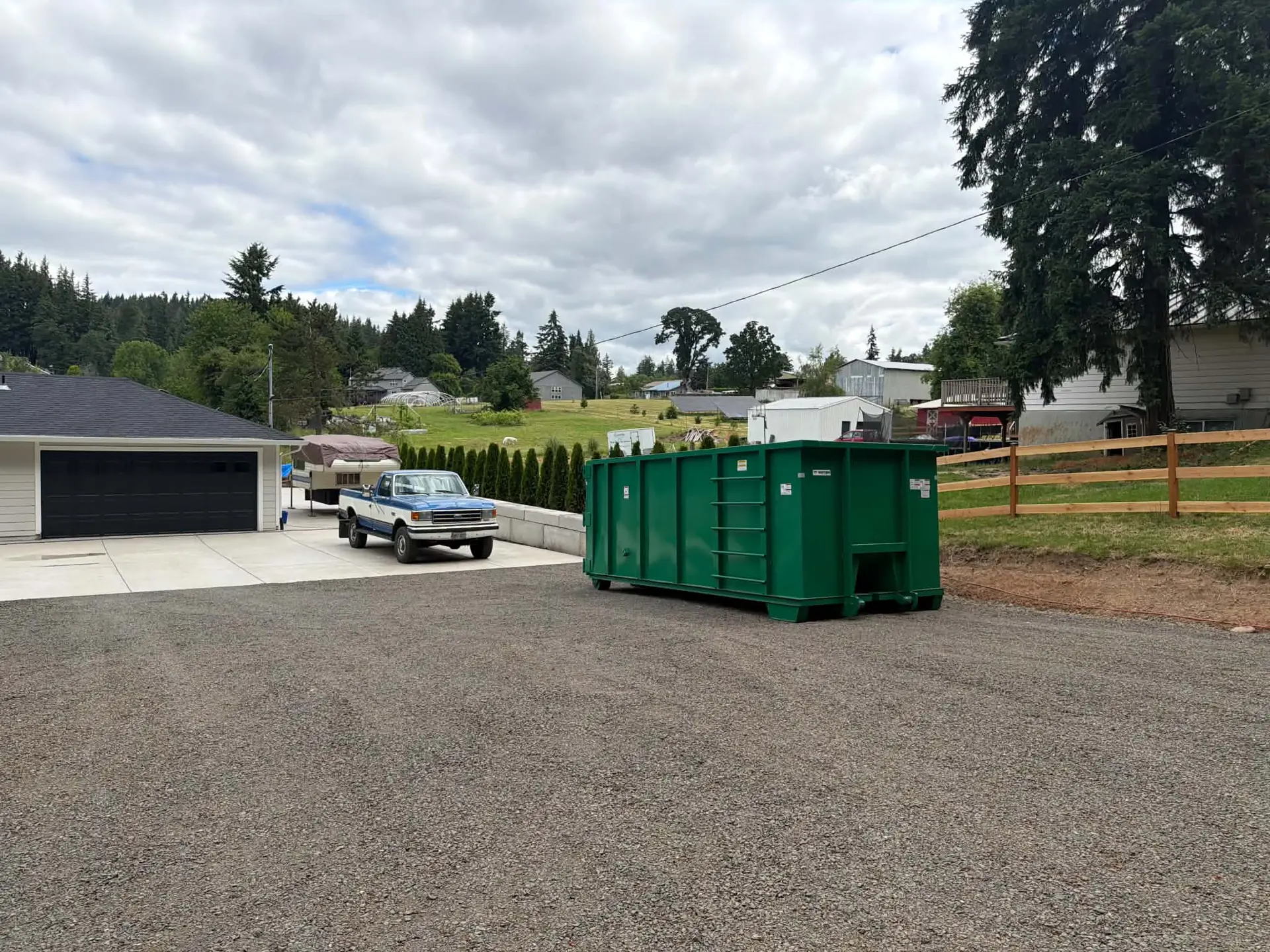
Dumpster planning
How to get ready for a dumpster delivery
A little planning before delivery can make the entire cleanup easier. Confirm the location, access, material list, and loading schedule before the container arrives.
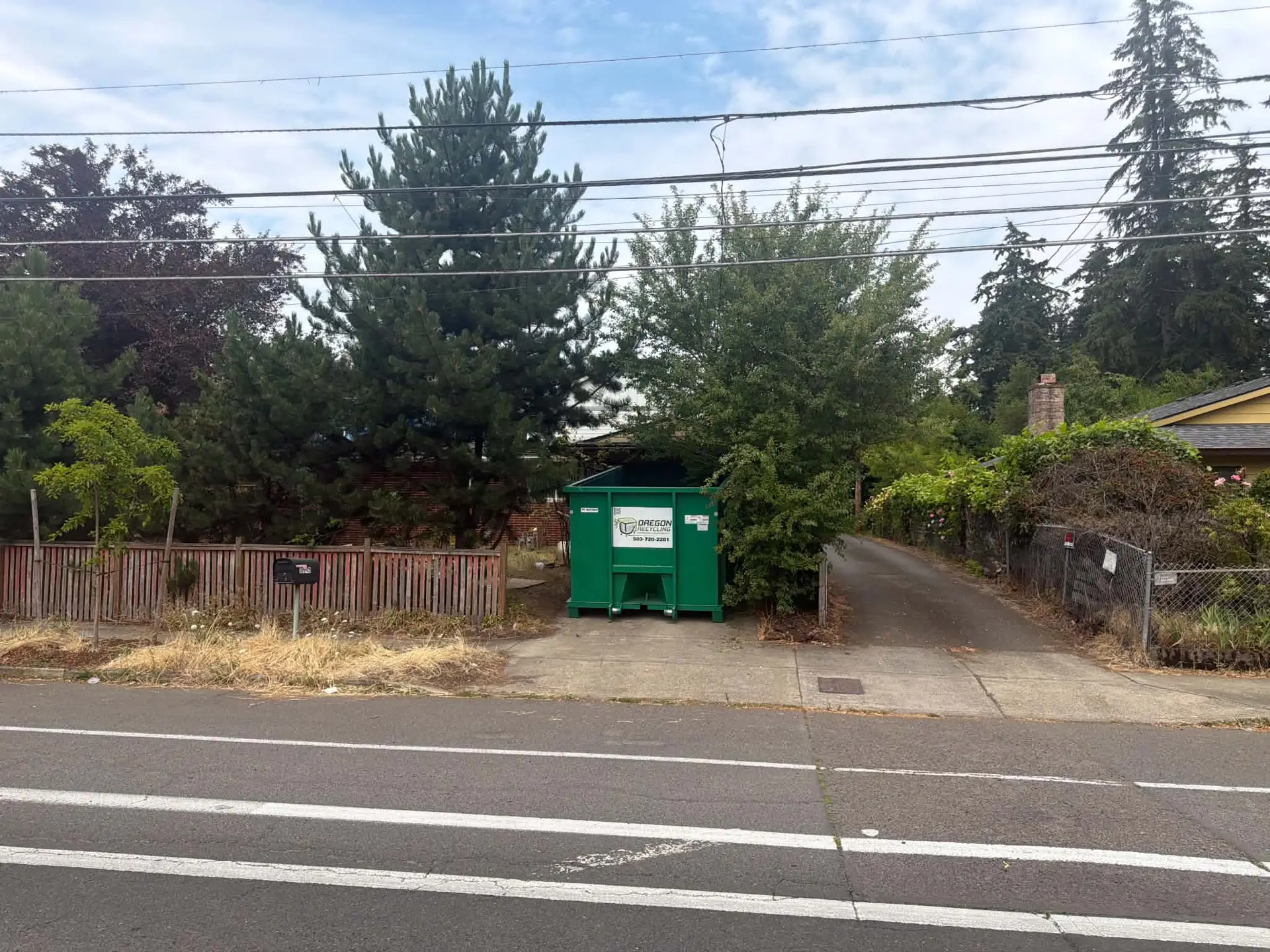
Choose a location with the team
Describe the area where you would like the dumpster placed and send photos if possible. Ask for the actual container dimensions and the access needed for delivery and pickup. Do not judge the space only by whether the dumpster’s footprint appears to fit.
Point out slopes, tight turns, gates, surface concerns, and overhead obstacles if present. Driveway protection is part of the published standard rental offering, but that does not replace a conversation about whether your chosen location is suitable.
Confirm permission before using the space
If you rent the property or use a shared driveway or parking area, confirm the placement with the owner or manager. Check any rules that apply to your property before scheduling. Keep access for other occupants in mind.
For a proposed Portland street or sidewalk placement, consult Portland’s Temporary Street Use Permitting guidance. In another jurisdiction, contact the appropriate local authority. Do not assume an open parking space can be reserved or used for a container without checking.
Keep the approach available
Before the agreed delivery time, clear vehicles and movable obstacles from the approved area. Let the team know about access changes, locked gates, or work happening near the delivery route. Give a reliable contact number for placement questions.
Plan for pickup as well. Material, vehicles, or equipment added later should not block the container’s access. If the site layout changes during the project, discuss it with the team before the scheduled collection.
Prepare the material and the people
Confirm what can be loaded and what needs separate handling. Keep questionable materials aside until you have an answer. Paint, batteries, chemicals, and unknown containers should not simply be mixed into an ordinary cleanup load. Metro provides guidance for household hazardous-waste disposal.
Arrange the help and equipment you need to load accepted items. If a large item is awkward or the route is difficult, discuss junk removal instead of assuming a rental includes labor. Stay within the agreed loading limits and keep children and pets away from the work area.
Put the schedule in writing
Keep a note of the service, requested delivery and pickup dates, quoted charges, and any placement instructions. Ask how to request an extension and who to contact if the plan changes. The goal is to have the important decisions made before the busy part of the cleanup begins.
- Container and placement confirmed.
- Permissions checked for the chosen location.
- Material acceptance and loading limits discussed.
- Access clear for delivery and pickup.
- Loading help arranged and dates agreed.
Explore your options
Compare the details, then tell us about your cleanup.
Useful local resources
Check the relevant authority for current requirements. General planning guidance does not replace confirmation of your materials, placement, and service terms.