Dumpster planning
15, 20, or 25 yards: which dumpster size do you need?
The right dumpster is the one that fits your material, your property, and the way you plan to work. Start with those three things before choosing between 15, 20, and 25 yards.
Begin with an inventory
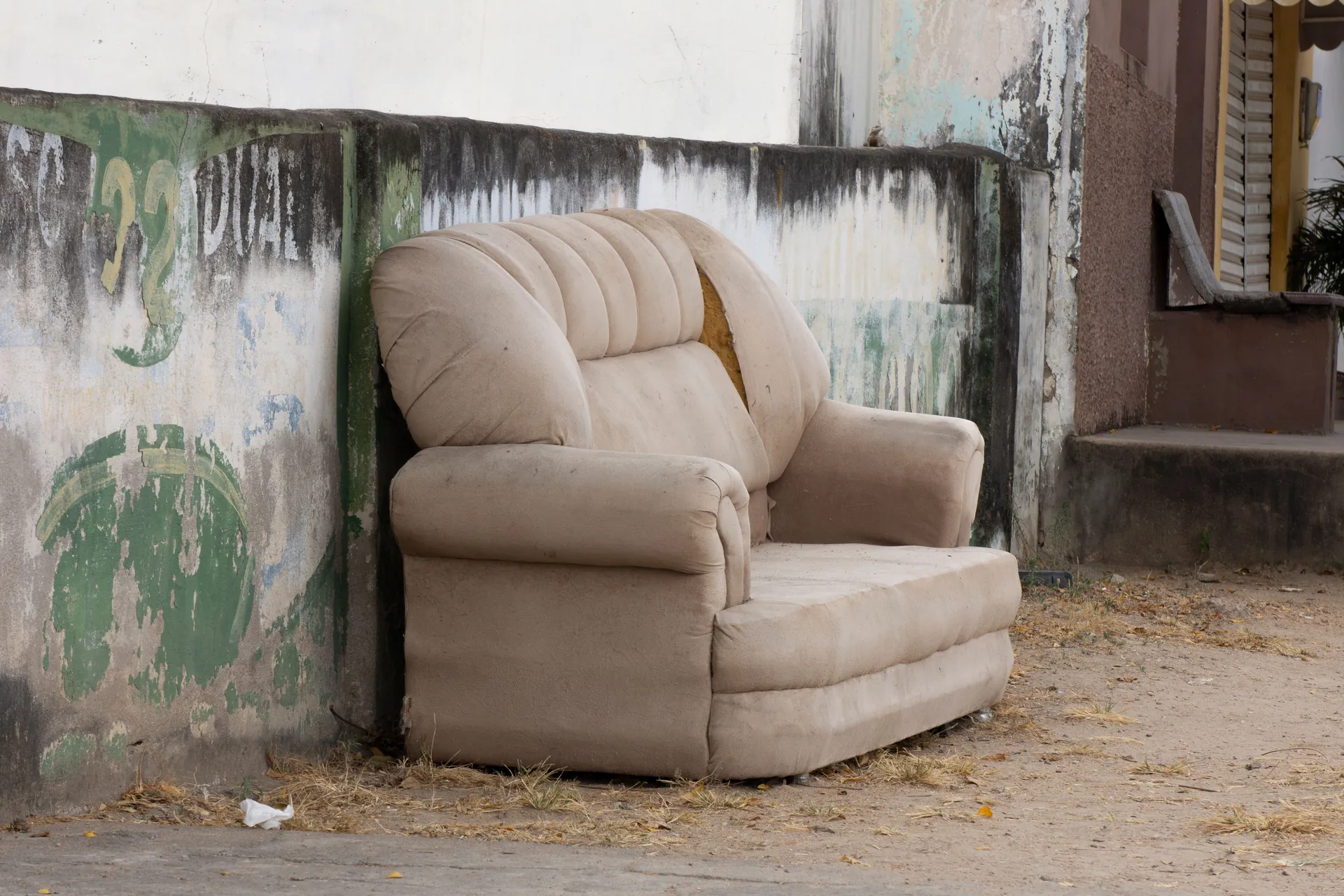
Walk through the project and write down what is actually leaving. A garage cleanout might include shelving, boxes, furniture, and a workbench. A remodel might include cabinets, lumber, fixtures, and demolition debris. An item list gives the team more useful information than a phrase like ‘a small project.’
Photograph the material from more than one angle. If it is still installed, explain what will be removed and what will stay. Keep reusable or retained items separate so the estimate does not include things you intend to keep.
Compare volume without confusing it with weight
Oregon Recycling offers 15-, 20-, and 25-yard dumpsters. These labels describe container volume, not an allowance to fill every size with any material. Furniture can use a lot of space. Dirt or concrete can be much denser. Describe heavy material separately and ask about the appropriate service and loading limits.
A smaller size is worth discussing when your list is limited. A larger size may provide more room for bulky items or a broader project. Neither choice should be based on a promised number of rooms or pickup-truck loads: those comparisons vary too much with what is being removed.
Check the container and delivery space
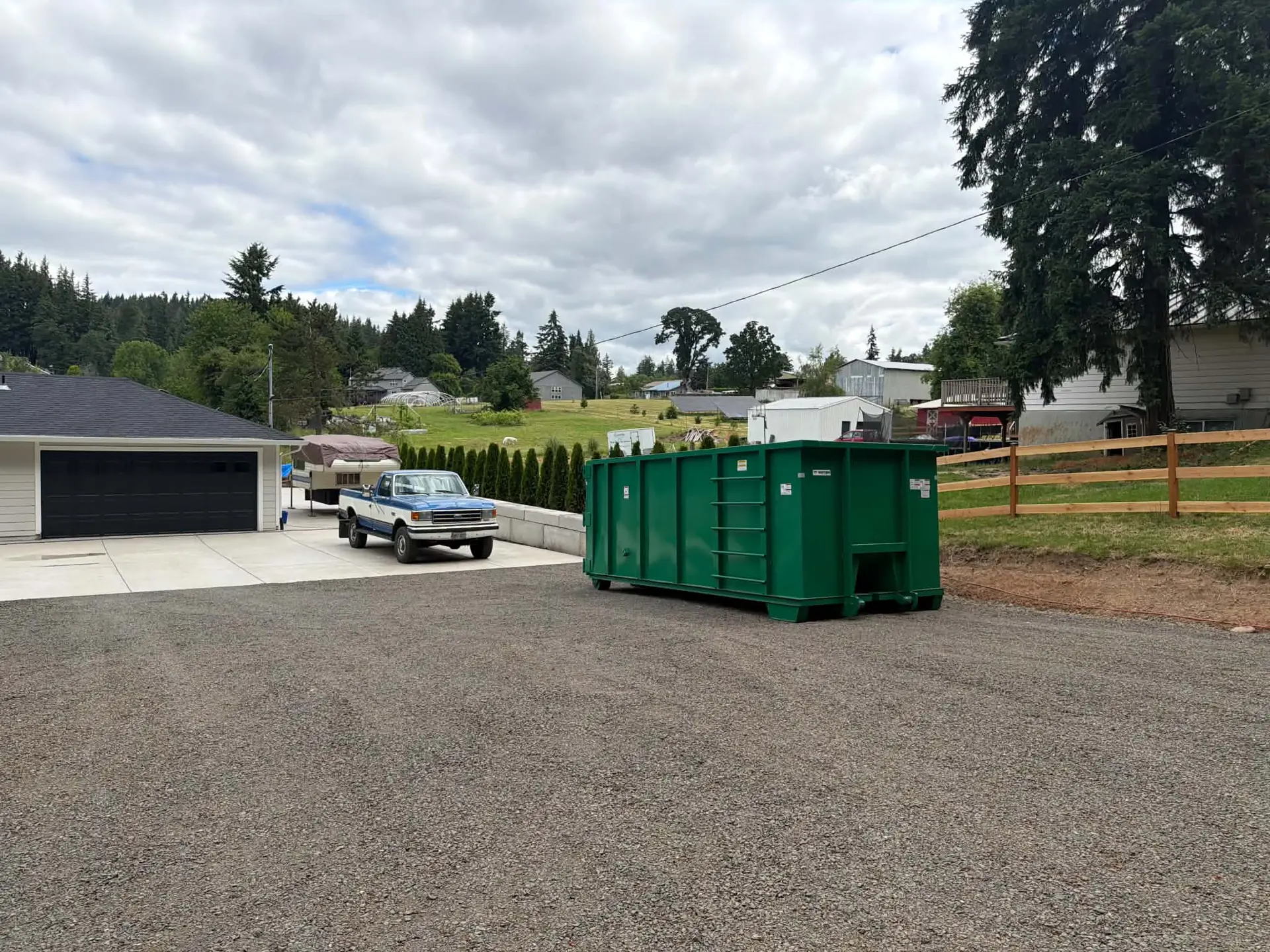
Ask for the dimensions of the actual container that would be supplied. The footprint is only part of the question: delivery equipment needs a workable approach, and you need room to load. Mention tight turns, gates, overhead obstacles, slopes, or shared parking if they affect your property.
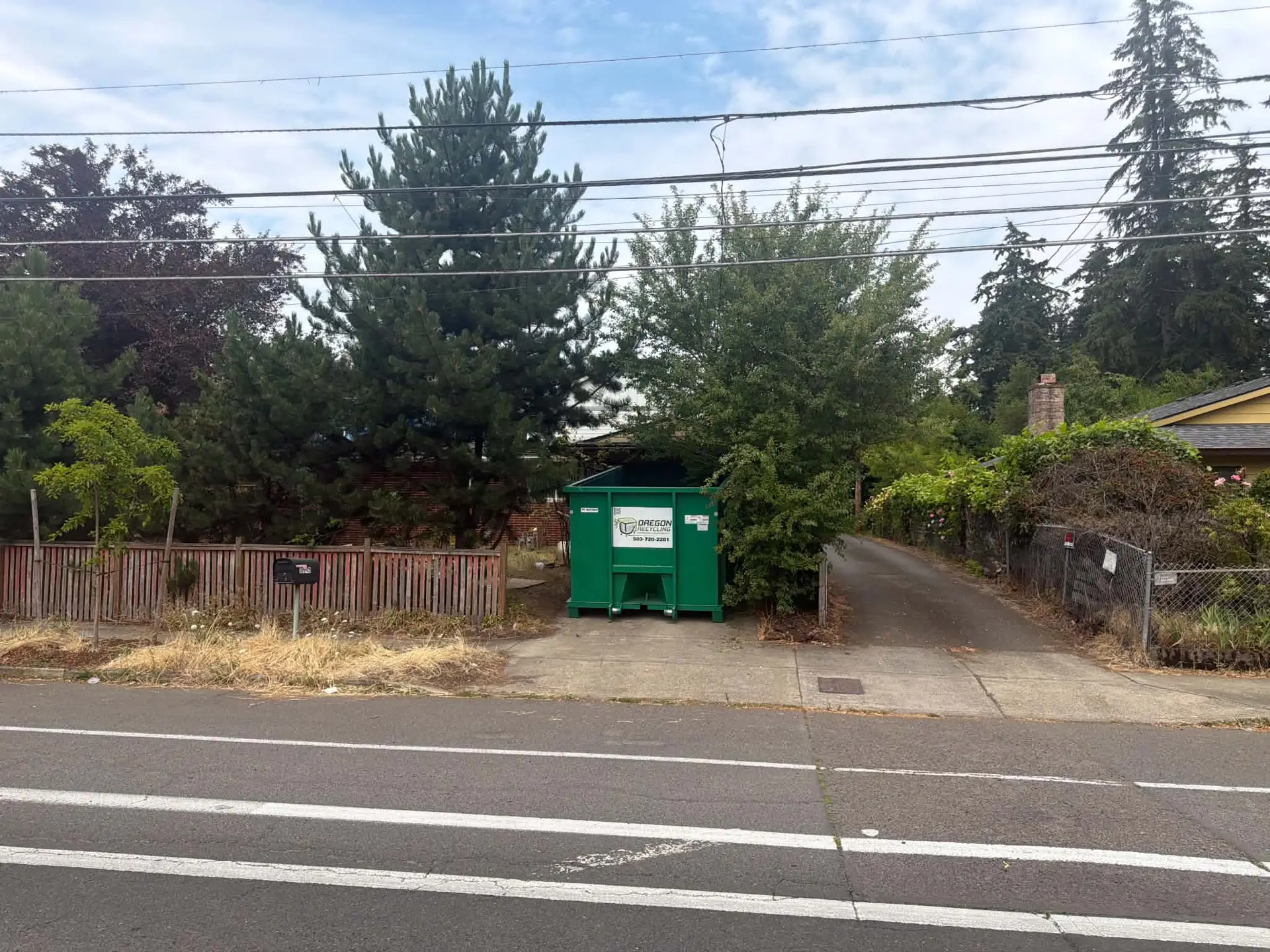
Confirm the location before arranging delivery. For a Portland project involving a street or sidewalk, consult the city’s Temporary Street Use Permitting guidance. A spot that looks empty is not automatically a suitable or authorized container location.
Allow enough time to load
The published base period for each standard dumpster is 4 days. Consider when helpers will be available, when demolition will produce material, and whether you need to sort before loading. Additional days have a separate rate for each size.
If you are unsure that you can load items safely or practically, ask about junk removal. If the load is ready and you can finish within one hour, ask about Load n’ Go. A different service can sometimes solve a timing problem better than changing container size.
Bring these details to the quote
You do not need a perfect volume calculation to start the conversation. A clear description lets the team explain the available options and the costs that apply.
- Your project address and preferred dates.
- An item list, material types, and photos if available.
- Any dense or special-handling material.
- The proposed loading location and access constraints.
- Whether you need removal help or will load the container yourself.
Explore your options
Compare the details, then tell us about your cleanup.
Useful local resources
Check the relevant authority for current requirements. General planning guidance does not replace confirmation of your materials, placement, and service terms.